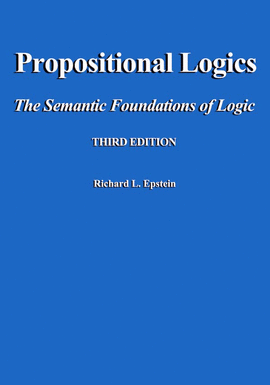
This series of volumes is meant to extend the scope of what we can formalize in classical predicate logic, and in doing so see the real limitations of what can be done. In the first section the standard of modern formal logic, classical predicate logic with equality, is set out, drawing on the full development in An Introduction to Formal Logic. In the second section classical predicate logic is extended to formalize reasoning that involves adverbs and relative adjectives by viewing those as modifiers of simpler predicates. What is normally taken to be atomic predicates, such as ?barking loudly?, can then have internal structure. Reasoning that involves conjunctions of terms, as in ?Tom and Dick lifted the table?, conjunctions of modifiers, conjunctions of predicates, and disjunctions of predicates can also be formalized by viewing them as part of the internal structure of atomic predicates. The internal structure of names is the topic of the third and last section. Names for functions are used in classical predicate logic to form complex names are presented first. In our ordinary reasoning we use desc


 -5%
-5%
 -5%
-5%
 -5%
-5%
 -5%
-5%
 -5%
-5%


 -5%
-5%

 -5%
-5%

 -5%
-5%